The Patek Philippe Nautilus is one of a small number of modern wristwatches whose design language is instantly identifiable across five decades. It was drawn in 1974 by Gérald Genta, launched in 1976 as reference 3700 at 42 mm, and has evolved through several generations while preserving the original silhouette. This guide walks the Nautilus family reference by reference — production era, case size, movement, complications, notable variations and collector significance — so a buyer can position any specific configuration inside the wider lineage.
A brief note on terminology. A Nautilus reference is a manufacturer model code (for example, 5711); a configuration suffix denotes case material, bracelet or strap and, in some cases, dial variant (5711/1A is steel bracelet; 5711/1R is rose gold bracelet). Two watches sharing a reference can differ substantially in market, wearability and rarity because of the suffix.
Timeline of Major References
| Era | Reference | Case | Movement / Note |
|---|---|---|---|
| 1976–1990 | 3700 "Jumbo" | 42 mm, steel and gold variants | Cal. 28-255 C (Jaeger-LeCoultre base); the original |
| 1980–1993 | 3800 | 37.5 mm mid-size | Cal. 335 SC; small-seconds bracelet variants |
| 1998–2006 | 3710/1A | 42 mm | Power reserve at 12; first modern-era Jumbo |
| 1996–2005 | 3712/1A | 42 mm | Moon phase, power reserve, small seconds; short production, high collector regard |
| 2006–2021 | 5711/1A | 40 mm | Cal. 324 S C; the reference that defined modern Nautilus demand |
| 2006– | 5712/1A | 40 mm | Moon phase, power reserve, sub-seconds; continuous production evolution |
| 2010– | 5726/1A | 40.5 mm | Annual calendar, moon phase; steel bracelet and strap configs |
| 2006–2018 (steel) | 5980/1A | 40.5 mm | Flyback chronograph, cal. CH 28-520 C |
| 2014– | 5990/1A | 40.5 mm | Travel Time flyback chronograph; two time zones + chrono |
| 2013– | 7118 / 7010 | 33–35 mm | Ladies' Nautilus in current configurations |
Reference 3700 — The Foundation (1976–1990)
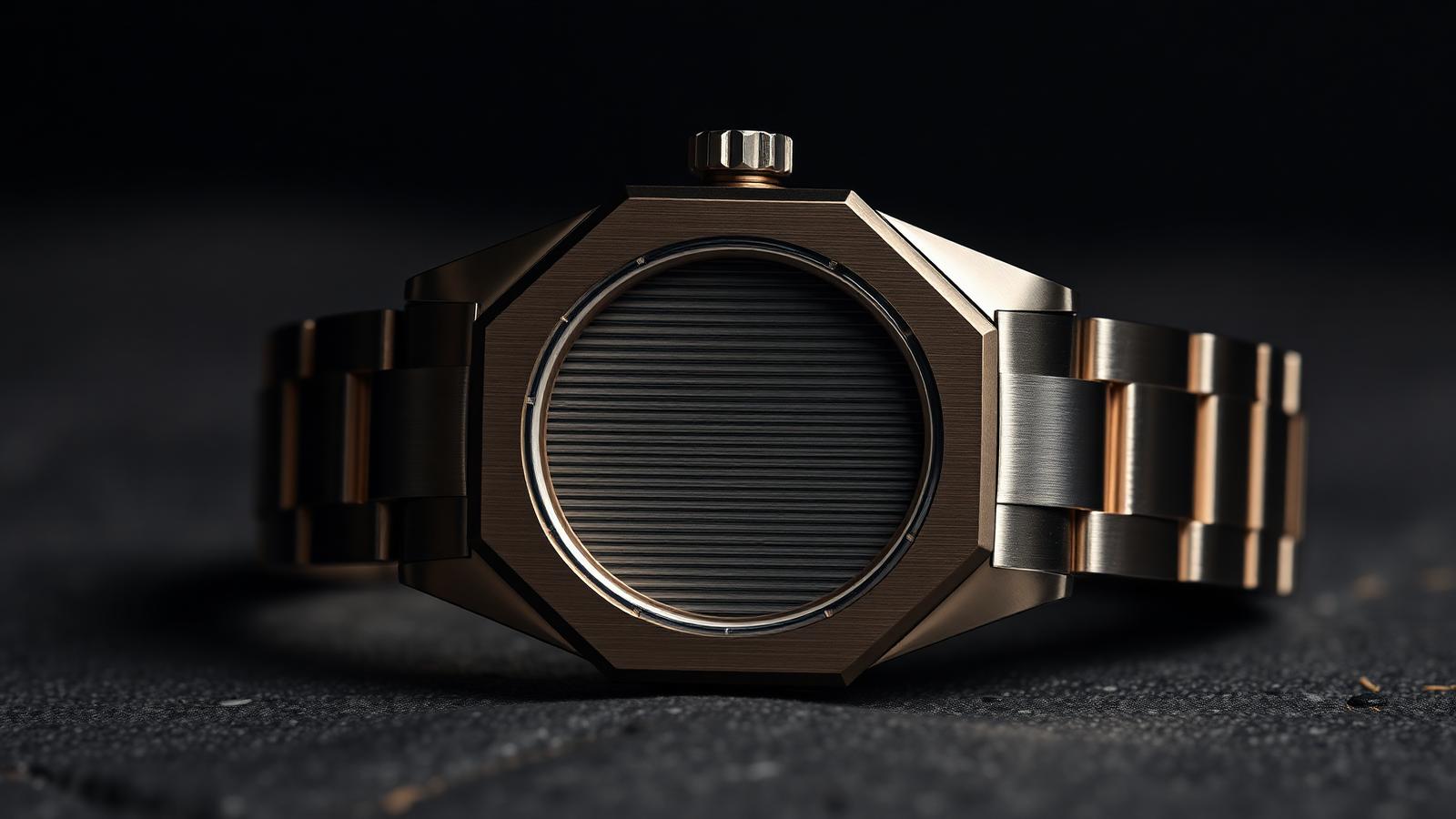
The original Nautilus. Ref. 3700 debuted at 42 mm — enormous by 1970s standards — in stainless steel with a horizontally embossed dial, integrated bracelet, and the distinctive "ears" of the two-part case that hinge around the movement. Powered by the ultra-thin cal. 28-255 C based on a Jaeger-LeCoultre ébauche, it set the visual vocabulary the collection has preserved for fifty years. Steel 3700s in original, unpolished condition are among the most historically significant modern Pateks and are traded almost exclusively at auction and by private treaty.
Reference 3800 — The Mid-Size Nautilus (1980–1993)
Introduced to broaden the collection, the 3800 shrank the case to 37.5 mm and added a seconds sub-dial in some variants. Steel/gold and precious-metal configurations followed. Today it wears comfortably on smaller wrists and is a natural entry point to the vintage Nautilus without the price gravity of the 3700.
References 3710/1A and 3712/1A — The Modern-Era Jumbos
The 3710/1A (1998–2006) reintroduced the 42 mm case and added a power-reserve indicator at 12 o'clock. The 3712/1A (1996–2005) is the more horologically ambitious of the pair, combining moon phase, power reserve and small seconds in a very short production window; it is one of the most consistently sought references in the catalogue after the original 3700.
Reference 5711 — The Reference That Defined Demand (2006–2021)
The 5711 replaced the 3710 in 2006 at a slightly softened 40 mm and became, within a decade, the single most demanded steel sports watch in the world. Key configurations and dial variants collectors distinguish:
- 5711/1A — steel bracelet, blue horizontally embossed dial (production run).
- 5711/1A green dial (2021) — the announced final-year steel configuration.
- 5711/1A "Tiffany" blue (2021) — the retailer-signed limited configuration.
- 5711/1R — rose gold on rose gold bracelet.
- 5711/1P — platinum, diamond baguette hour markers.
- 5711 20th-anniversary editions — including the white-gold diamond bezel variant.
References 5712 and 5726 — Moon Phase and Annual Calendar
The 5712 pairs moon phase, pointer date, sub-seconds and power reserve in the 40 mm Nautilus case, powered by cal. 240 PS IRM C LU. The 5726 stepped up to an annual calendar with moon phase at 40.5 mm, with steel bracelet and strap configurations (5726A) offering different wear and market profiles. Both are current production and represent the pragmatic upper tier of the Nautilus complication family for daily-wear collectors.
References 5980 and 5990 — The Chronographs
Reference 5980 introduced a flyback chronograph to the Nautilus in 2006 at 40.5 mm, powered by the in-house cal. CH 28-520 C. Steel/steel was discontinued in 2018; rose gold and precious-metal configurations continue. Reference 5990 (2014–) layers a Travel Time complication over the flyback chronograph, giving two time zones on a single chronograph platform — a technically ambitious and horologically distinctive Nautilus.
Ladies' Nautilus — References 7118, 7010
The 7118 (35.2 mm) and earlier 7010 (32 mm) preserve the Nautilus vocabulary at smaller diameters. Configurations range from steel with plain bezel to precious-metal cases with factory diamond settings. Movement architectures vary by generation and specific configuration; the modern 7118/1A carries an in-house automatic caliber.
Case Sizing and Wear Context
The Nautilus wears larger than its diameter suggests because of the wide flat bezel and the horizontally embossed dial's shallow depth, and it wears longer end-to-end because of the integrated bracelet. The original 3700 at 42 mm is the reference the family is scaled from; the 40 mm 5711 that followed reads visually similar on the wrist despite the smaller case, because bezel and lug proportions were preserved. The 40.5 mm complication cases (5726, 5980, 5990) add height rather than diameter to accommodate chronograph or annual-calendar movements — buyers coming from a dress watch background often find the 5980 sits taller than expected, and should try one on the wrist before committing. The mid-size 3800 at 37.5 mm is genuinely smaller and reads as such; on wrists under 6.5 inches it is often the most wearable Nautilus in the catalogue.
Movement Distinctions by Reference
Movement choice is a meaningful part of a reference's identity, not a footnote. Time- and-date Nautilus references have moved through four generations of caliber: the original 28-255 C (JLC-based ébauche, 3700), the 335 SC (3800, mid-size), the 315 family used in the 3710/3712 with power-reserve architecture, and the in-house 324 S C that defined the 5711 for the whole modern demand cycle. The 5711 later ceded to the 26-330 S C in some 20th-anniversary and successor variants — buyers should confirm caliber against the specific reference's production window rather than assume a generation. Complication references carry their own architectures: the cal. 240 PS IRM C LU micro-rotor drives the 5712's moon-phase / power-reserve display; the cal. 324 S QA LU 24H drives the 5726 annual calendar; the cal. CH 28-520 C is the modern in-house flyback chronograph in the 5980; the cal. CH 28-520 C FUS layers Travel Time on top for the 5990. Movement condition, service history and the state of the finishing on the bridges materially affect market value on the vintage references (3700, 3800, 3712) and are inspected on any serious acquisition.
Configuration Suffix Notes
Patek's suffixes are more than material codes; they convey bracelet vs. strap and, occasionally, dial format. The most frequent conventions on Nautilus references:
- /1A — steel case on steel bracelet. The default modern Nautilus format.
- A (no /1) — steel case on non-bracelet strap or composite. 5726A is the strap-mounted annual calendar configuration; wears and prices differently from the /1A bracelet variant.
- /1R — rose gold case on rose gold bracelet.
- /1G — white gold case on white gold bracelet (rare in modern Nautilus).
- /1P — platinum case on platinum bracelet, typically with baguette hour markers.
- Dash-suffix (e.g., -001, -010) — a further breakdown for dial variant or specification within the same reference/config. On some references the dash-suffix identifies the exact dial colour or texture.
Two watches sharing a reference can trade at very different levels because of the suffix. A 5711/1A and a 5711/1R are architecturally the same watch in different materials; a 5980/1A and a 5980/1R are the same movement in different cases. When discussing a Nautilus at the level of value or scarcity, always cite reference and configuration.
Acquisition Checks by Reference
Every Nautilus reference has a small set of acquisition checks that materially change the buying decision. The list below is not exhaustive, but a serious acquisition file should address each of the applicable items:
- Ref. 3700. Confirm case sharpness on the two-part case seam and the lugs; check dial for tropical patina versus damage; verify caseback engraving against production window; confirm caliber execution (early vs. late 28-255 C).
- Ref. 3800. Bracelet condition and stretch matter more than on any other Nautilus because the smaller case emphasises bracelet articulation; confirm dial matches production era and correct sub-seconds architecture.
- Ref. 3710 / 3712. Verify power-reserve indicator function and hand alignment; on the 3712 verify moon-phase disc, pointer date and small-seconds alignment; caliber 240 PS IRM C LU service history is a specific ask.
- Ref. 5711/1A. Confirm dial variant (blue, green 2021, Tiffany, 20th anniversary); check bezel and lug chamfers for polish; verify caliber generation against production year; require the original certificate of origin and hangtag.
- Ref. 5726 / 5726A. Confirm bracelet vs. strap configuration and price accordingly; verify annual-calendar day / date / month alignment; require service record if watch is beyond the recommended service interval.
- Ref. 5980 / 5990. Confirm chronograph function through a full run, reset alignment on the counter; on the 5990 verify Travel Time day-night indicator alignment and pushers; require complete set including original strap or bracelet.
- Ladies' 7118 / 7010. Confirm bezel setting (plain vs. diamond) and dial variant; verify caliber generation; on precious-metal cases request documentation of gem-setting if applicable.
Reference Family vs. Configuration Suffix
The single most common mistake buyers make on the Nautilus is treating a reference as a price point. It is not. The reference is an architecture. The configuration, dial variant, condition and completeness are what determine value. Any credible conversation about a specific Nautilus begins with the full reference-plus-suffix identifier and the specific dial variant, and only then discusses number.
Goal-Based Selector
| Your Goal | Consider First |
|---|---|
| Historical purity, first-generation architecture | Ref. 3700 (steel, unpolished) |
| Smaller wrist, vintage sensibility | Ref. 3800 in steel or two-tone |
| The archetypal modern Nautilus | Ref. 5711/1A (blue dial) |
| Complications for daily wear | Ref. 5712, 5726, 5990 |
| Chronograph collector | Ref. 5980 (steel or rose) |
| Trophy rarity | Ref. 5711 Tiffany, 5711/1P, 3712 |
How Timepiece Opulence LSP Sources Nautilus References
Because most desirable Nautilus references are either discontinued or effectively unavailable at retail, sourcing is an off-market exercise. Our practice is to locate specific references and configurations through private networks, verify condition and provenance against publicly available production data, and route each candidate through independent third-party authentication before placement. We are not an authorized Patek Philippe dealer; we act as an independent broker on behalf of the client.
Continue Reading
For pricing methodology, see the Nautilus valuation guide, and for the current price dashboard, the 2026 reference-by-reference guide.
Sources
- Patek Philippe collection and archive material — patek.com.
- Patek Philippe Museum — patek.com/museum.
- Christie's, Sotheby's and Phillips reference archives for auction descriptions and provenance notes.
Editorial disclosure. Timepiece Opulence LSP is an independent private brokerage. We are not affiliated with, endorsed by, or an authorized dealer of Patek Philippe. Production dates and specifications reflect publicly available manufacturer material and established horological references as of July 21, 2026.