Authentication is the single most important — and least well understood — step in any pre-owned luxury-watch transaction. A signature on a sales receipt is not authentication. A general appraisal is not authentication. A dealer's own written statement of authenticity, unsupported by a documented examination, is not the standard a serious collector should accept. Authentication is a structured, evidence-based examination of a specific watch, on a specific day, by a qualified specialist who has no financial interest in the sale.
This guide sets out what that standard actually looks like: the categories of evidence a competent examination covers, the tests and documentation a buyer should expect, and the difference between authentication, appraisal, service, and manufacturer certification. It is written for collectors who intend to hold, wear, and eventually pass along significant watches — and who want to understand what an independent authentication file should contain before funds move.
Intake and Chain of Custody
Authentication begins the moment a watch changes hands. A responsible intake process records who possessed the watch, when it was received, and in what condition — with photography of the watch, box, papers, and any accessories at the point of transfer. This chain-of-custody record does not, by itself, prove authenticity, but it makes subsequent examination possible: any later inconsistency (a swapped bracelet, an altered dial, a re-inserted movement) becomes attributable to a specific window rather than an unknowable past.
For consigned or brokered watches, chain of custody also protects the seller. A documented intake grade — dial condition, case wear, bracelet stretch, timekeeping — establishes the baseline the watch must return in if the transaction is unwound.
Reference and Serial Number Verification (and Its Limits)
Every serious examination begins with the reference and serial numbers stamped or engraved on the case. These are checked against the manufacturer's known production windows and reference variations for the period. A correctly formatted serial number is a necessary condition of authenticity — it is not a sufficient one. Counterfeits routinely carry plausible serials copied from genuine watches, and legitimate service can alter or replace external components without invalidating the movement.
The right way to use serial data is as context: does the reference correspond to a model produced in the year the seller claims? Do the dial variations, bezel insert, crown guards, and bracelet endlinks match what the manufacturer shipped in that window? A mismatch is a red flag; a match is a starting point.
Movement and Caliber Inspection
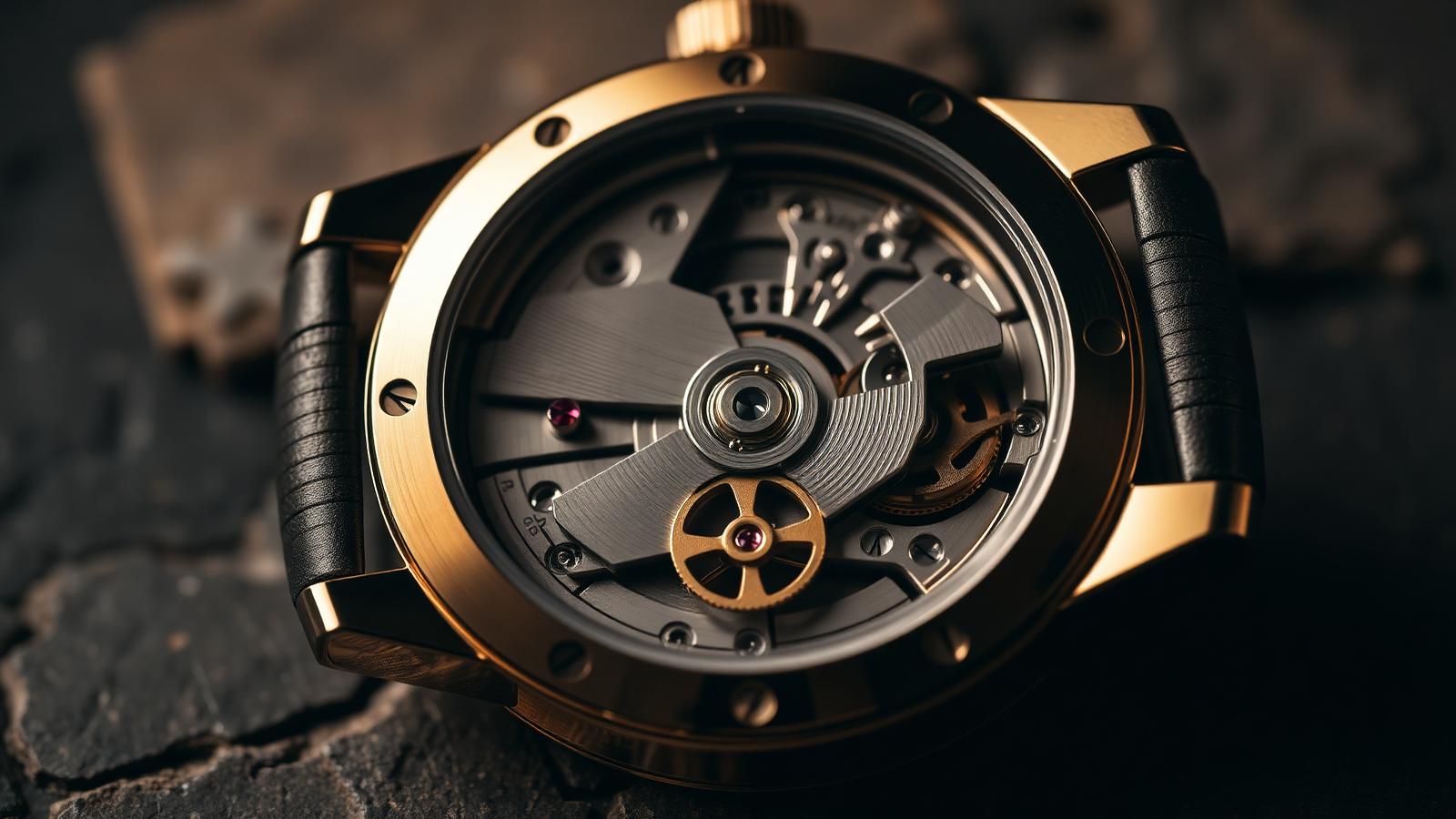
Movement evidence is the single most decisive category in most examinations. Modern counterfeits have narrowed the gap on external features — case profile, printing, bracelet geometry — but the caliber, its architecture, its finishing, and its engravings remain the strongest lay-inaccessible authenticity signal. A specialist opens the caseback with the correct tools, examines the movement under magnification and confirms:
- The caliber matches the reference for the production window.
- Movement engravings, jewels, and bridge geometry match documented examples.
- Finishing — perlage, Geneva stripes, chamfered bridges, polished heads — is consistent with the manufacturer's grade and not applied cosmetically over a different base movement.
- The rotor, balance, escapement, and mainspring bridge are correct and not substitutions from a lower-grade or clone caliber.
Where the caseback is factory-sealed and cannot be opened without documented cause, the specialist should say so — and note the limitation in the written findings.
Dial, Hands, Lume, Crystal, Bezel, Crown, Bracelet, and Clasp
Every component visible on the wrist carries evidence of originality. A competent examination inspects each in turn against reference examples for the period:
- Dial. Print depth, font, colour, alignment of the seconds track, applied indices and appliqués, and correctness of the signature layout.
- Hands. Shape, length, finishing, and lume application matched to the reference and period; replacement or reluming is a legitimate service outcome but must be disclosed.
- Lume. Colour, tone under UV, and aging pattern consistent across dial and hands — mismatched lume is a common tell for a swapped part.
- Crystal. Correct material (acrylic, mineral, sapphire), correct cyclops magnification and profile where applicable, and correct anti-reflective coating for the reference and year.
- Bezel. Insert material, printing, click count, and — for divers — unidirectional operation with the correct action.
- Crown. Correct logo, geometry, and thread action; correct gasket condition where the watch is claimed as water-resistant.
- Bracelet and clasp. Endlink codes, link geometry, clasp engravings, and micro-adjustment mechanism matched to the reference and period.
Case Geometry, Polishing, and Refinishing
Case evidence is critical but often ambiguous. Polishing, service, and part replacement over time legitimately change a case's appearance — the question is whether those changes are consistent with a genuine watch that has lived a life, or with a watch built to imitate one. A specialist evaluates the case profile against the manufacturer's original geometry: lug shape and taper, chamfer sharpness, crown guard proportion, caseback engraving depth, and hallmark placement. Over-polishing is identified as such and noted; it lowers value but does not defeat authenticity. Replacement components are identified, disclosed, and — where possible — sourced.
Timegrapher and Performance Testing
Where the movement is accessible and the watch is intended to be worn, a specialist places the piece on a timegrapher and records rate, amplitude, and beat error in several positions. These readings do not authenticate the watch — a well-serviced counterfeit can time acceptably — but they establish current performance against the manufacturer's specification for the caliber and support any commitments the seller makes about condition. Poor readings or an inconsistent trace across positions indicate a service is due, or that something in the movement is not what it should be.
Water-Resistance Testing (When Appropriate)
For divers and other watches carrying a water-resistance rating, a dry or wet pressure test can be conducted at the point of service — never as a substitute for service, and never on a vintage watch whose seals are unknown. Pressure testing confirms that the case, crystal, crown, and pushers seal to specification today, on this watch. It does not authenticate the watch and it does not warrant future performance; both should be stated in the file.
Documentation, Provenance, and Archival Records
Original box, warranty card, service records, and archival material substantially strengthen an authentication file. On brands with formal archival records — most notably Patek Philippe's Extract from the Archives — a manufacturer record confirms what left the factory in a given year. It does not, by itself, prove that the specific watch presented today is that watch. Documents can accompany a piece they were never issued for, and archival records can be requested for reference numbers that no longer match the watch as presented. Provenance is a documentary complement to physical authentication, not a substitute for it.
Stolen-Watch Database Checks
Before completing an acquisition, the reference and serial should be checked against the recognised industry registries — most notably The Watch Register in the United Kingdom, and Interpol's Stolen Works of Art database for exceptional pieces. A clear result is not a guarantee of clean title, because not every loss is reported and databases are only as complete as their submissions. A hit is an immediate stop: the transaction should pause pending resolution, no matter how attractive the piece or how credible the seller.
Written Findings and File Contents
The output of a competent authentication is a written record — not a verbal assurance. A complete file should contain:
- Statement of examination, dated and signed by the examining specialist, with their qualifications noted.
- High-resolution photographs of dial, hands, movement, caseback engraving, bracelet endlinks, and clasp.
- Reference and serial numbers, correlated with the production window.
- Case condition notes: original, lightly polished, heavily polished, or refinished; replacement components identified.
- Movement notes: caliber confirmed, finishing consistent, timegrapher readings where taken, and any known service history.
- Water-resistance test result where applicable.
- Documentation review: box, papers, warranty card, service records, and archival records with each item's evidential weight described.
- Stolen-watch database check result.
- Stated limitations of the examination — what was not opened, not tested, or not obtainable.
Authentication vs. Appraisal, Service, and Manufacturer Certification
These four are frequently conflated. They answer four different questions.
- Authentication — Is this watch genuine, and is it what it claims to be? Independent, evidence-based examination.
- Appraisal — What is this watch worth today, and on what basis? A market-value opinion, typically for insurance or estate purposes.
- Service — Does this watch keep time and seal correctly today, and what work has been performed? Delivered by a watchmaker, not an authenticator.
- Manufacturer Certification — Does the manufacturer confirm this watch's authenticity and, where offered, its current service condition?Available on some brands, typically at the point of factory service.
A responsible pre-owned acquisition often involves authentication and — for high-value or complicated references — manufacturer service or its equivalent from a recognised independent specialist, followed by appraisal for insurance.
Why an Independent Specialist Is the Stronger Standard
A dealer's own statement of authenticity carries an inherent conflict of interest. This does not make dealer statements dishonest, and many dealers examine watches rigorously. It makes those statements, on their own, an insufficient standard for significant transactions. An independent specialist — a watchmaker or authentication practice with no financial interest in whether the sale closes — provides the missing separation between the party selling and the party certifying. The buyer gains a documented record from someone who is paid to say "no" as easily as "yes".
Timepiece Opulence LSP requires an independent third-party authentication step before a watch is placed with a client. This is our standard; it is not universal across the pre-owned market, and buyers should confirm what any seller — including us — means when they use the word authenticated. No examination can promise zero risk. The purpose of independent authentication is not to eliminate risk but to reduce, disclose, and document it to a level a serious collector can accept.
Common Buyer Mistakes
- Treating a correctly formatted serial number as proof of authenticity. Necessary, not sufficient.
- Treating "box and papers" as authentication. Documents can accompany a watch that is not the watch they were issued for.
- Accepting dealer self-certification on high-value pieces without independent examination.
- Confusing an archival record with authentication of the physical object.
- Arranging examination after funds move, rather than before.
- Skipping the stolen-watch database check because a seller "seems trustworthy".
Authoritative Sources
Buyers evaluating specific references should read the manufacturer's own material first and rely on recognised horological institutions for reference standards:
- Manufacturer reference pages and technical documentation at rolex.com, patek.com, audemarspiguet.com, panerai.com and equivalent brand sites.
- The Fondation de la Haute Horlogerie reference library at hautehorlogerie.org.
- Chronometry certification standards at cosc.swiss and the METAS Master Chronometer specification at metas.ch.
- Stolen-watch registries at thewatchregister.com and Interpol's Stolen Works of Art database.
Editorial disclosure. Timepiece Opulence LSP is an independent private brokerage. We are not affiliated with, endorsed by, or an authorized dealer of any manufacturer discussed above. This article describes the authentication standard we recommend and apply; it is not a substitute for examination of a specific watch by a qualified independent specialist, and no examination can guarantee zero risk.